Wednesday, October 25, 2017

Discussion for 29 October 2017

Deuteronomy 34:1-12
1Then Moses went up from the plains of Moab to Mount Nebo, to the top of Pisgah, which is opposite Jericho, and the LORD showed him the whole land: Gilead as far as Dan, 2all 3the Negeb, and the Plain — that is, the valley of Jericho, the city of palm trees — as far as Zoar. 4The LORD said to him, “This is the land of which I swore to Abraham, to Isaac, and to Jacob, saying, ‘I will give it to your descendants’; I have let you see it with your eyes, but you shall not cross over there.” 5Then Moses, the servant of the LORD, died there in the land of Moab, at the Lord’s command. 6He was buried in a valley in the land of Moab, opposite Beth-peor, but no one knows his burial place to this day. 7Moses was one hundred twenty years old when he died; his sight was unimpaired and his vigor had not abated. 8The Israelites wept for Moses in the plains of Moab thirty days; then the period of mourning for Moses was ended.
Naphtali, the land of Ephraim and Manasseh, all the land of Judah as far as the Western Sea,
9Joshua son of Nun was full of the spirit of wisdom, because Moses had laid his hands on him; and the Israelites obeyed him, doing as the LORD had commanded Moses.
10Never since has there arisen a prophet in Israel like Moses, whom the LORD knew face to face. 11He was unequaled for all the signs and wonders that the LORD sent him to perform in the land of Egypt, against Pharaoh and all his servants and his entire land, 12and for all the mighty deeds and all the terrifying displays of power that Moses performed in the sight of all Israel.
For Consideration
- Recall why Moses could not enter the Promised Land (Numbers 20:1-13). In this passage, Moses dies at the Lord's command. He is still full of life. Considering Moses' stature among the prophets......what does this say about God?

Monday, October 9, 2017

Discussion for 15 October 2017

 Exodus 32:1-14
1When the people saw that Moses delayed to come down from the mountain, the people gathered around Aaron, and said to him, “Come, make gods for us, who shall go before us; as for this Moses, the man who brought us up out of the land of Egypt, we do not know what has become of him.” 2Aaron said to them, “Take off the gold rings that are on the ears of your wives, your sons, and your daughters, and bring them to me.” 3So all the people took off the gold rings from their ears, and brought them to Aaron. 4He took the gold from them, formed it in a mold, and cast an image of a calf; and they said, “These are your gods, O Israel, who brought you up out of the land of Egypt!” 5When Aaron saw this, he built an altar before it; and Aaron made proclamation and said, “Tomorrow shall be a festival to the LORD.” 6They rose early the next day, and offered burnt offerings and brought sacrifices of well-being; and the people sat down to eat and drink, and rose up to revel.
7The LORD said to Moses, “Go down at once! Your people, whom you brought up out of the land of Egypt, have acted perversely; 8they have been quick to turn aside from the way that I commanded them; they have cast for themselves an image of a calf, and have worshiped it and sacrificed to it, and said, ‘These are your gods, O Israel, who brought you up out of the land of Egypt!’” 9The LORD said to Moses, “I have seen this people, how stiff-necked they are. 10Now let me alone, so that my wrath may burn hot against them and I may consume them; and of you I will make a great nation.”
11But Moses implored the LORD his God, and said, “O LORD, why does your wrath burn hot against your people, whom you brought out of the land of Egypt with great power and with a mighty hand? 12Why should the Egyptians say, ‘It was with evil intent that he brought them out to kill them in the mountains, and to consume them from the face of the earth’? Turn from your fierce wrath; change your mind and do not bring disaster on your people. 13Remember Abraham, Isaac, and Israel, your servants, how you swore to them by your own self, saying to them, ‘I will multiply your descendants like the stars of heaven, and all this land that I have promised I will give to your descendants, and they shall inherit it forever.’” 14And the LORD changed his mind about the disaster that he planned to bring on his people.

FOR CONSIDERATION
- Most of this text gives an account of the conversation between YHWH and Moses. Do you believe Moses was able to change YHWH's mind because God was worried about His personal reputation? 

Wednesday, October 4, 2017

Discussion for 8 October 2017

Exodus 20:1-4, 7-9, 12-20
1Then God spoke all these words: 2I am the LORD your God, who brought you out of the land of Egypt, out of the house of slavery; 3you shall have no other gods before me.
4You shall not make for yourself an idol, whether in the form of anything that is in heaven above, or that is on the earth beneath, or that is in the water under the earth.
7You shall not make wrongful use of the name of the LORD your God, for the LORD will not acquit anyone who misuses his name.
8Remember the sabbath day, and keep it holy. 9Six days you shall labor and do all your work.
12Honor your father and your mother, so that your days may be long in the land that the LORD your God is giving you.
13You shall not murder.
14You shall not commitadultery.
15You shall not steal.
16You shall not bear false witness against your neighbor.
17You shall not covet your neighbor’s house; you shall not covet your neighbor’s wife, or male or female slave, or ox, or donkey, or anything that belongs to your neighbor.
18When all the people witnessed the thunder and lightning, the sound of the trumpet, and the mountain smoking, they were afraid and trembled and stood at a distance, 19and said to Moses, “;You speak to us, and we will listen; but do not let God speak to us, or we will die.” 20Moses said to the people, “Do not be afraid; for God has come only to test you and to put the fear of him upon you so that you do not sin.”

FOR CONSIDERATION
  • Can church preach the Commandments of God with the same certainty with which it preaches the Gospels? Are we content to preach the easy words?

Thursday, September 28, 2017

Discussion for 1 October 2017

Matthew 21:23-32
23When he entered the temple, the chief priests and the elders of the people came to him as he was teaching, and said, “By what authority are you doing these things, and who gave you this authority?” 24Jesus said to them, “I will also ask you one question; if you tell me the answer, then I will also tell you by what authority I do these things. 25Did the baptism of John come from heaven, or was it of human origin?” And they argued with one another, “If we say, ‘From heaven,’ he will say to us, ‘Why then did you not believe him?’ 26But if we say, ‘Of human origin,’ we are afraid of the crowd; for all regard John as a prophet.” 27So they answered Jesus, “We do not know.” And he said to them, “Neither will I tell you by what authority I am doing these things.
28“What do you think? A man had two sons; he went to the first and said, ‘Son, go and work in the vineyard today.’ 29He answered, ‘I will not’; but later he changed his mind and went. 30The father went to the second and said the same; and he answered, ‘I go, sir’; but he did not go. 31Which of the two did the will of his father?” They said, “The first.” Jesus said to them, “Truly I tell you, the tax collectors and the prostitutes are going into the kingdom of God ahead of you. 32For John came to you in the way of righteousness and you did not believe him, but the tax collectors and the prostitutes believed him; and even after you saw it, you did not change your minds and believe him.”
FOR CONSIDERATION
- How does this parable help one determine whether they are righteous or not?

Wednesday, September 20, 2017

Discussion for 24 September 2017

Jonah 3:10-4:11

10 When God saw what they did, how they turned from their evil ways, God changed his mind about the calamity that he had said he would bring upon them; and he did not do it.

Jonah’s Anger

But this was very displeasing to Jonah, and he became angry. He prayed to the Lord and said, “O Lord! Is not this what I said while I was still in my own country? That is why I fled to Tarshish at the beginning; for I knew that you are a gracious God and merciful, slow to anger, and abounding in steadfast love, and ready to relent from punishing. And now, O Lord, please take my life from me, for it is better for me to die than to live.” And the Lord said, “Is it right for you to be angry?” Then Jonah went out of the city and sat down east of the city, and made a booth for himself there. He sat under it in the shade, waiting to see what would become of the city.

The Lord God appointed a bush,[a] and made it come up over Jonah, to give shade over his head, to save him from his discomfort; so Jonah was very happy about the bush. But when dawn came up the next day, God appointed a worm that attacked the bush, so that it withered. When the sun rose, God prepared a sultry east wind, and the sun beat down on the head of Jonah so that he was faint and asked that he might die. He said, “It is better for me to die than to live.”

Jonah Is Reproved

But God said to Jonah, “Is it right for you to be angry about the bush?” And he said, “Yes, angry enough to die.” 10 Then the Lord said, “You are concerned about the bush, for which you did not labor and which you did not grow; it came into being in a night and perished in a night. 11 And should I not be concerned about Nineveh, that great city, in which there are more than a hundred and twenty thousand persons who do not know their right hand from their left, and also many animals?”

FOR CONSIDERATION
- Calvin says to know God is to know ourselves. How do we empathize with Jonah?

Wednesday, September 13, 2017

Discussion for 17 September 2017

 Matthew 18:21-35
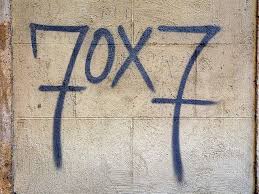
21Then Peter came and said to him, “Lord, if another member of the church sins against me, how often should I forgive? As many as seven times?” 22Jesus said to him, “Not seven times, but, I tell you, seventy-seven times. 
23“For this reason the kingdom of heaven may be compared to a king who wished to settle accounts with his slaves. 24When he began the reckoning, one who owed him ten thousand talents was brought to him. 25and, as he could not pay, his lord ordered him to be sold, together with his wife and children and all his possessions, and payment to be made. 26So the slave fell on his knees before him, saying, ‘Have patience with me, and I will pay you everything.’ 27And out of pity for him, the lord of that slave released him and forgave him the debt. 28But that same slave, as he went out, came upon one of his fellow slaves who owed him a hundred denarii; and seizing him by the throat, he said, ‘Pay what you owe.’ 29Then his fellow slave fell down and pleaded with him, ‘Have patience with me, and I will pay you.’ 30But he refused; then he went and threw him into prison until he would pay the debt. 31When his fellow slaves saw what had happened, they were greatly distressed, and they went and reported to their lord all that had taken place. 32Then his lord summoned him and said to him, ‘You wicked slave! I forgave you all that debt because you pleaded with me. 33Should you not have had mercy on your fellow slave, as I had mercy on you?’ 34And in anger his lord handed him over to be tortured until he would pay his entire debt. 35So my heavenly Father will also do to every one of you, if you do not forgive your brother or sister from your heart.”
FOR CONSIDERATION
- Is perpetual forgiveness really a good thing for the human community?
- Does this parable put a limit on God's grace?

Friday, September 8, 2017

Discussion for 10 September 2017

Exodus 12:1-14
1The LORD said to Moses and Aaron in the land of Egypt: 2This month shall mark for you the beginning of months; it shall be the first month of the year for you. 3Tell the whole congregation of Israel that on the tenth of this month they are to take a lamb for each family, a lamb for each household. 4If a household is too small for a whole lamb, it shall join its closest neighbor in obtaining one; the lamb shall be divided in proportion to the number of people who eat of it. 5Your lamb shall be without blemish, a year-old male; you may take it from the sheep or from the goats. 6You shall keep it until the fourteenth day of this month; then the whole assembled congregation of Israel shall slaughter it at twilight. 7They shall 8They shall eat the lamb that same night; they shall eat it roasted over the fire with unleavened bread and bitter herbs. 9Do not eat any of it raw or boiled in water, but roasted over the fire, with its head, legs, and inner organs. 10You shall let none of it remain until the morning; anything that remains until the morning you shall burn. 11This is how you shall eat it: your loins girded, your sandals on your feet, and your staff in your hand; and you shall eat it hurriedly. It is the passover of the LORD. 12For I will pass through the land of Egypt that night, and I will strike down every firstborn in the land of Egypt, both human beings and animals; on all the gods of Egypt I will execute judgments: I am the LORD. 13The blood shall be a sign for you on the houses where you live: when I see the blood, I will pass over you, and no plague shall destroy you when I strike the land of Egypt.
take some of the blood and put it on the two doorposts and the lintel of the houses in which they eat it.
14This day shall be a day of remembrance for you. You shall celebrate it as a festival to the LORD; throughout your generations you shall observe it as a perpetual ordinance.
FOR CONSIDERATION

- Normally this passage is looked at during Holy Week. The other lectionary readings for this Sunday are Romans 13:8-14 (Reference to the Commandments) and Matthew 18:15-20 (Confronting Wrong Doers). What is the connection of this passage to the other lectionary readings?